Grains & ingredients
How to Buy Sehore Sharbati Wheat: Check Origin and Quality
Understand what appearance can tell you about Sharbati wheat, why traceable sourcing matters and what to ask before paying a premium.
Start with what is being sold
Sharbati is a familiar name in wheat buying, particularly in Madhya Pradesh. Sehore is a place associated with it. If a seller uses the more specific name Sehore Sharbati, ask what origin information supports that description.
The official Sharbati Gehu geographical-indication registration identifies Madhya Pradesh as its geographical area. That registration is not proof that every bag described as Sharbati was grown in Sehore.
Sources: IP India: Sharbati Gehu geographical indication, application 699
Use visual checks for condition, not certification
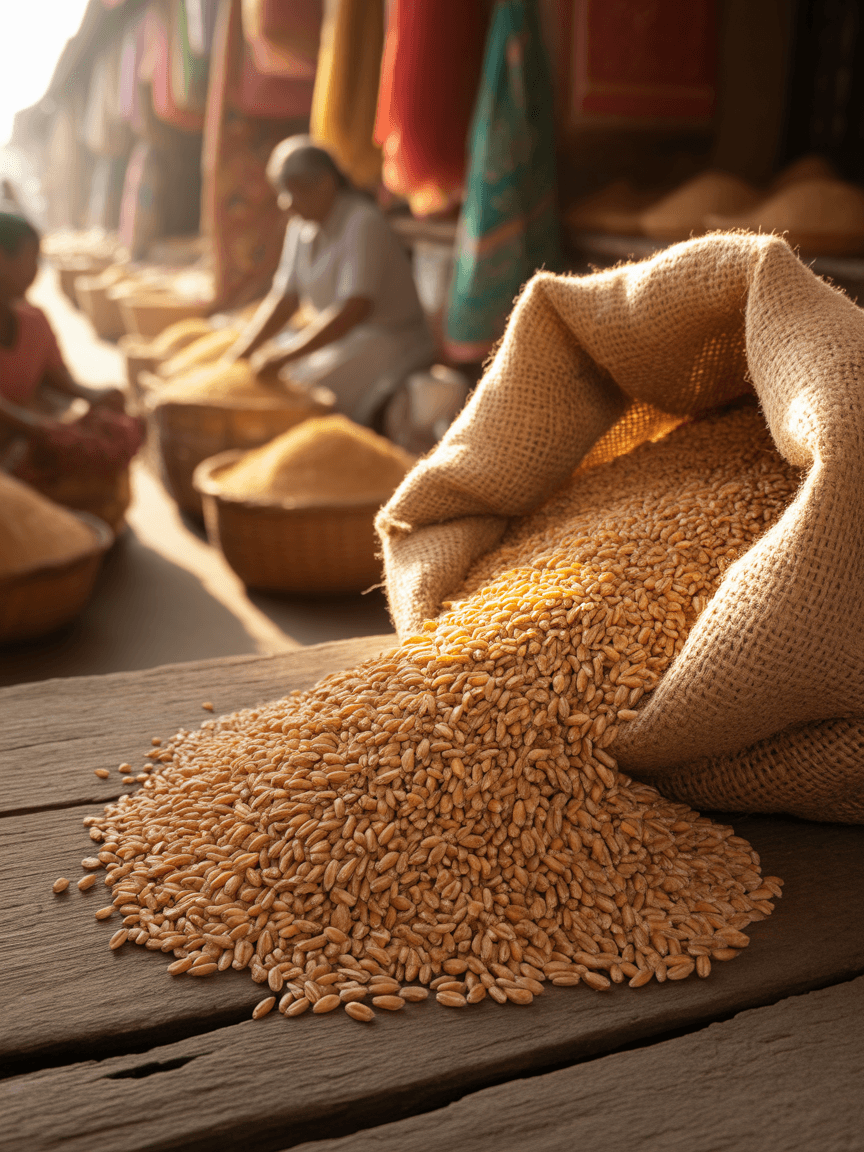
Buyers often look for plump, clean grains with a golden appearance. These observations can help you inspect a batch, but colour and size vary and cannot authenticate geographic origin by themselves.
Look for obvious insects, dampness, foreign material or unusual odour. Avoid treating a visual check as a laboratory test for pesticide residues, protein or organic status.
Ask for traceable information
A useful seller can explain the product description, source and batch information. Retain the purchase record so questions can be linked to the wheat actually supplied.
- What district or supplier is this batch sourced from?
- Is it described as a single wheat type or a blend?
- What cleaning and storage steps are used?
- Can the product and batch be identified on the bill or packaging?
- If organic certification is claimed, which certification supports it?
Try a small cooking batch
If you are buying for roti texture and flavour, a small trial is often more useful than buying a large quantity immediately. Keep the grind and recipe consistent while you compare water needs, rolling and the finished roti.
A result you enjoy can guide a repeat purchase. It does not establish that other wheat is unsafe, that Sharbati has a particular protein advantage, or that an untested grain has fewer residues.
Protect quality after purchase
Buy an amount suited to your storage space and use. Keep the grain or atta clean, dry and protected from pests, and follow the supplied storage guidance.
For everyday buying, provenance, clear product information and good handling are stronger checks than a promise that colour, price or a regional name guarantees purity.
Find flour for your kitchen
See current ingredients, quantity choices and prices in the product listing.
Explore the catalogue